Schedule online now - appointments available.

For SAME day / emergency appointments
Call (212) 752-1163
Dentist NYC
New York City's Top Dentist
Sachar Dental NYC is a top-rated NYC dentist practice for everything from teeth cleanings and cavity fillings to root canals! With a team of highly skilled and experienced NYC dentist practitioners and top-rated NYC dental providers, Sachar Dental is New York City's one-stop-shop for almost everything dental- for adults and children.
Four Dentists, Five Specialties - One Vision
"Healthy Teeth & Gums for Life!"

General Dentist, Cosmetic Dentist, Periodontist, Prosthodontist, Dental Implant Specialist, Invisalign Providers
What we do (click below):


More of what we do (click): Check-up | Teeth Cleaning | Children | Dental Emergency
Our Philosophy
Our philosophy is simple, "We care for our patients the way we would want to be cared for ourselves". Click here for more about our NYC dentist practice philosophy.
Our Goal: "Healthy Teeth & Gums for Life!"


What Our Patients are Saying...

In my 27 years in New York this is the best dentist office I've ever had the pleasure to experience. There is only complete sincerity and professionalism at Dr. Sachar's office. - Sue, Google
Best dental care experience of my lifetime. I've been treated by 3 dentists in Sachar Dental NYC all of whom are quite gifted & dedicated to the patient. - G.D, Google
Dr. Sachar and Dr. Osterman are excellent - courteous, friendly and professional - JB, Google
I absolutely love Sachar Dental NYC. Every time I go for my teeth cleaning, it always feels like I am getting the VIP treatment. My hygienist, Amy, always takes great care with my cleaning. Dr. Sachar is wonderful and truly runs a high-end practice. - L.M Google
It’s the best NYC dental office I have ever been in my life. Dr. Sachar is highly professional. ---Julia.NY, Google
Sachar Dental NYC Professional Affiliations:


"Best Dentist in NYC!"
This is one of the best Dentist in NYC. Finally after three years I was able to find someone who was great. This Dentist office is a pleasure to visit. And the hygienist, is so thorough. - M.D. Zocdoc
Best dentist ever! From the front desk to the hygienists to the doctors, everyone is wonderful, and I've gotten excellent care. I've been going to Sachar Dental NYC for 10 years. 11/10, would recommend. - R.W. Google
This was my best dentist experience I have had in my life. - Y.K Google
Exceptional service, very professional team, thoughtful, great work ethic, always follow through. Amongst the best NYC Dentist / NYC Cosmetic Dentist practice! - R.B. Google
They are simply the best! Going to the dentist for me was a nerve wracking experience - I avoided it at all costs! However, everyone at Sachar Dental is friendly, funny and comforting. - Kavita. D, Yelp
Excellent care, incredibly friendly service and never a wait... best Dentist I've ever been to. - N.B, Google
It is hard to find a good NYC dentist. If you are looking for one, look no further. - Natasha. A, Google
Dentist NYC: Latest Technology in a Relaxed, Comfortable Environment

Latest Technology - Digital X-rays - Paperless Charts - Intra-Oral Cameras -
Digital Impressions - Mercury-Free & BPA-Free Materials - Top NYC Dentist
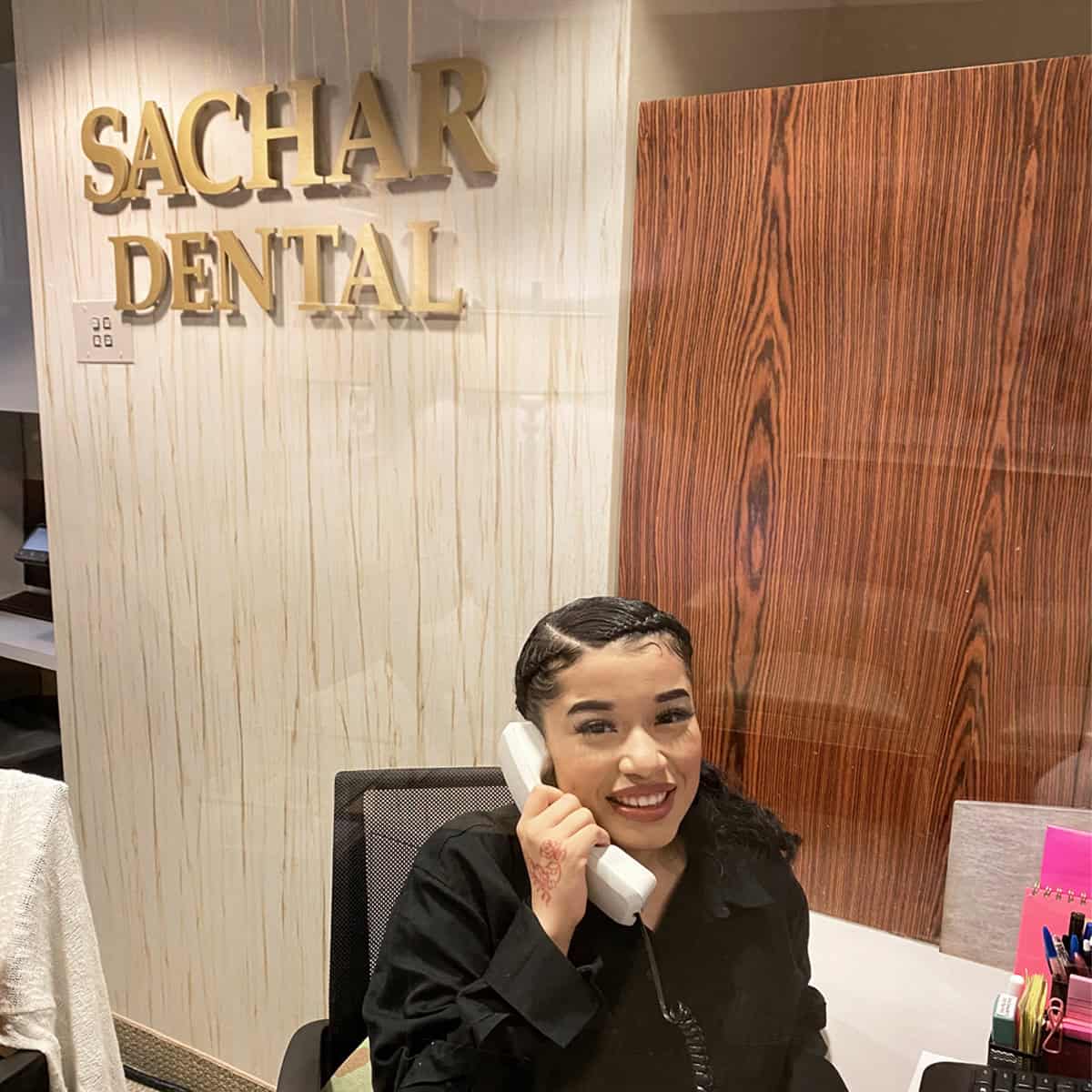
"Awesome! Awesome! Awesome! Run don't walk to this dental office- the best dentist in NYC." A.D. Google
Top NYC Dentist: When you make an appointment with the dentists at Sachar Dental, you can be confident that you will be seeing a highly skilled, experienced, and knowledgeable top-rated NYC dentist, or dental specialist.
Sachar Dental NYC is located in Midtown Manhattan
20 E. 46th St. Rm 1301 (Between Fifth and Madison) (212) 752-1163
We serve Midtown Manhattan, New York City, including the East Side and West Side of Manhattan, Uptown NYC, Downtown NYC, Brooklyn and Queens. As top rated NYC dentists, we have proudly served our New York City community since 2002. Conveniently located close to Grand Central Terminal as well as Penn Station, Sachar Dental NYC is easy to get to from just about anywhere. A member of the Better Business Bureau
Get Directions to Sachar Dental NYC
Please enter your starting address for directions to us by car, bus or subway.
Note: You may see a pop-up from Google stating content is public. Please click "Send Anyway".
At Sachar Dental NYC, we specialize in general dentistry, cosmetic dentistry, Invisalign and dental implants. We treat adults as well as children. We have served as a top NYC dentist for more than 20 years. Dentist NYC for all your dental needs. More here.





Best Dentist NYC

This is by far the BEST NYC dentist- no doubt!! - Yellow Pages
Am so relieved to have found a great NYC dentist. Really appreciate the care here. - CH Zocdoc
The best NYC dentist is right! My experience was the best I've had at a dental practice. - L,S, Google
Contact Us
Contact Sachar Dental NYC with any questions or comments you may have. Call our NYC dentist office or use the quick contact form below.